
Business

How to Apply for a Business Loan without ITR?

To get a business loan, irrespective of any sector, your business needs to follow the guidelines for the  minimum ITR for business loan, this solidifies its eligibility for a business loan. But do you know if getting a loan is possible even without ITR? Well yes. Nowadays, business loans can be obtained without filing income taxes. It’s not all plain sailing, though. Interest rates are higher, and the loan tenures are shorter. More entrepreneurs are seeking business loans today than ever because there are more start-ups.

It’s no secret that you will likely get a business loan for your start-up business or setting up your business. However, you should be sure that you file your income tax returns on time to ensure that you don’t get a penalty on your tax claim.

Get The Business Loan You Need For Your Business Without ITR!

To clear all your concerns, we have created a guide on how to get a business loan without ITR

Why is getting a business loan without presenting ITR documents beneficial?

You can still get a business loan without ITR since it can be challenging to file income tax returns when you start a new business. But as your business grows, you must check

how much ITR is required for a business loan, as this may help you get a bigger business loan.

Now, get back to how it benefits from getting a business loan without ITR. As you might start afresh after an employment gap, you might not have the proper documents or money. You may also find that you cannot repay your loan because your business or start-up business has not generated enough revenue yet.

Regardless of the reason, if you are considering starting a company or business, be assured that getting a business loan without providing your income tax returns can be more advantageous than presenting the documents to obtain the loan.

Here are two key advantages of getting a business loan without ITR:

  • The lengthy process of verifying documents is not needed.
  • You can get a business loan with immediate effect.

Real Money Solutions offers several different types of loans, you can reach out to us if you have any queries. You can also refer to the following information to understand the requirements and eligibility criteria for getting a business loan without ITR.

Also Read: 6+ Different Types of Unsecured Business Loans

Are there any requirements for applying for a business loan without an ITR?

Here are the top criteria you must meet when applying for a business loan without itr and income proof.

  • LLPs, partnerships, sole proprietorships, cooperative societies, limited liability partnerships, etc., are all eligible for business loans.
  • Business start-ups and first-timers can also apply for a Startup Business Loan.
  • (At the time of loan maturity), the applicant for a business loan must be at least 18 or at most 65 years of age.
  • On the borrower’s business requirements and credit profile, a loan amount of 10% to 30 lakhs might be available.
  • Credit scores of 700 or higher are required for qualification for the loan. Credit score positively affects loan terms.
  • Depending on the lender, the minimum turnover varies.
  • The only exceptions are equipment financing, bill discounting, and letters of credit, where the collateral is required.

Also Read: How to get a Business Loan under CGTMSE Scheme without Collateral?

Is it possible to apply for a business loan without an ITR?

We have already answered this question, here’s some more information for the same. Business loans without ITR are available to the following entities:

  • Organisations
  • Individuals
  • Limited Liability Partnerships,
  • Trusts
  • Cooperative societies
  • Partnerships
  • Sole proprietorships.

What are the documents required to apply for a business loan without ITR?

A business loan application without ITR requires the following documents:

1. Application form

The bank or financial institution will ask you for your personal information to process your loan. A business loan application must be completed and submitted along with the required information when you apply for one.

2. Photograph

Banks and other financial institutions also require a set of passport-sized photographs to verify your identity.

3. Business plan

As you are contemplating a business loan, banks may require your business plan to disburse the loan. To ensure they don’t run into trouble when sanctioning the loan, ensure you provide a well-documented one.

4. Identification proof

The lender also needs to see a valid photo ID, such as your passport or driving license, so the loan can be processed and disbursed.

5. Pan card

Depending on your lender, you may also be required to provide your PAN to file your income tax returns.

6. Company incorporation certification

Businesses or companies may also need to provide their incorporation certificates to verify their existence.

7. MoU or partnership deed

If your company is a partnership firm, you must also provide a copy of the company’s Memorandum of Understanding or Partnership Deed. In addition, you need to provide a lease agreement or the establishment certificate if you have opened a shop or rented property.

8. Bank statements

Providing your bank account statements may be required if you plan on borrowing from a Non-Banking Financial Institution.

What are the top ways you can apply for a business loan without ITR?

Obtaining a business loan without submitting your tax returns is possible in many ways. It is popular to use government schemes and provide collateral as two methods.

1. Through Government Schemes

Several government schemes allow businesses to apply for loans without presenting collateral or information from their income tax returns.

To learn more about them, visit the official government websites. You can also learn about some top government-backed schemes for small businesses from our in-depth guide featuring Top 8 Government Loan Schemes for Small Businesses in India.

2. When Collateral is Available

The loan application can be amended if you can offer collateral but cannot furnish a copy of your income tax returns. Lenders can process your loan more easily without seeing your income tax returns if you do so.

Get The Business Loan You Need For Your Business Without ITR!

Conclusion

Many lenders can approve business loans without needing income tax returns. Most of these loans are given to traders and small-scale businesses.

You will repay a business loan at a higher interest rate and within a short time frame if you apply for one without presenting your ITR details. Moreover, you should provide the lender with a substantial bank statement showing you can repay the loan.

To get a business loan without ITR, you can reach out to the best-unsecured business loan providers in Mumbai.

Home

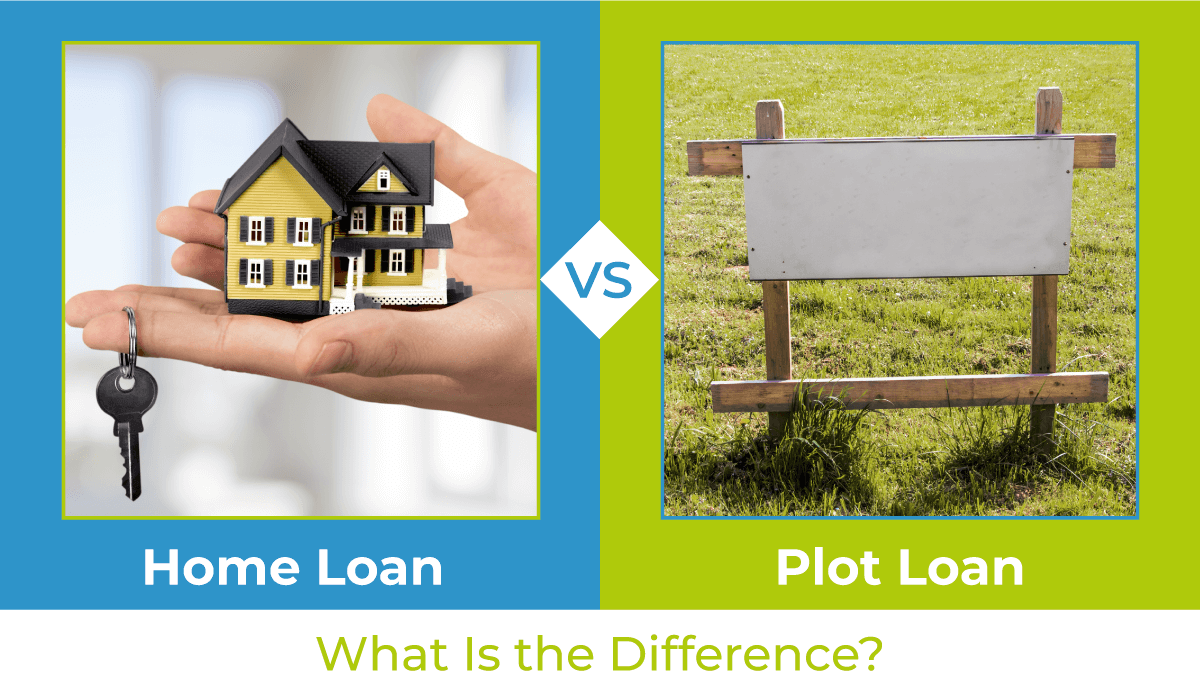
Home Loan vs. Plot Loan: What Is the Difference?

Both banks as well as non-financial institutions offer dedicated home loans for properties that are slated to be constructed in the future, for ready-to-move houses, and under-construction units as well. On the other hand, these institutions offer access to land loans or plot loans so that the loan borrower can purchase a piece of land for the construction of a house or investment purposes.

While buying only a piece of land and buying or selling ready properties are the same concepts, applying for loans for both applications tends to be unique processes. Let us help you understand the difference between a home loan and a plot loan to help you make an informed decision while applying for either a home loan or a plot loan.

Looking to invest in property but
unsure of which loan option is right for you?

A] What is a Home Loan?

A home or housing loan offers assistance in purchasing a resold or under-construction property. You cannot make use of a home loan for acquiring a plot of land. But you can also avail a home loan for buying a residential property, whether it is an apartment or a house. With Real Money Solutions, you can learn more about home loans. You can also reach out to us for more information about the same! Let’s get back to the point at hand, defining plot loan.

Also Read: 9 Different Types of Home Loans You Should Know About

B] What is a Plot Loan?

The plot loan is also referred to as the land loan. It is used primarily for buying a plot of land that has been validated for the construction of residential properties. Quite similar to the home loan, you cannot make use of a plot loan to purchase a ready-to-move-in or unfinished property. People usually apply for a plot loan towards buying a piece of land for constructing a home or for future investments.

C] Features of a Home Loan

Some of the interesting features of a home loan are:

  • You can avail of a home loan to buy a home of your choice
  • The maximum tenure of the home loan is around 30 years
  • You can make use of the home loan to purchase a house, an apartment, a villa, or a bungalow from approved builders -depending on the lender
  • Benefits offered by the home loan tax are available under Sections 80C and 24 of the Income Tax Act for principal amounts and interest paid towards the home loan
  • Depending on the lender, the LTV or Loan-to-Value ratio can be high up to 90 percent of the cost of the property will be offered
  • If you avail the loan as a joint home loan and the same is availed by the wife or husband having separate sources of income, they can go ahead with claiming the income tax deduction on the home loan individually. It remains applicable for both the interest and principal amount components of the total loan amount.
  • You can also make use of the home loan to purchase properties from government-based development authorities, associations of apartment owners, existing cooperative housing societies, or houses that are constructed by private homeowners.
  • It’s also possible to get a home loan with a low CIBIL score, learn how with our comprehensive guide: How Do You Get a Home Loan With a Low CIBIL Score?

Also Read: The Whole Truth about Credit Scores for Home Loans

D] Features of a Plot Loan

Before you apply for a plot or land loan, some salient features to look out for are:

  • You cannot make use of a plot loan to buy a property utilized for agricultural purposes.
  • A piece of land purchased with the loan should be situated within the limits of the corporation or municipality.
  • You cannot make use of the land loan to purchase a property situated in an industrial area or in some rural area
  • The maximum tenure of the loan is up to 15 years
  • The LTV or Loan-to-Value ratio on a plot loan can be as high as 80 percent of the total plot cost
  • You can make use of the land loan to buy a property through direct allotment or to purchase a resale plot based on the respective lender

Tax benefits on a plot loan remain eligible for loans that are purchased for constructing something on the piece of land. you can claim this tax deduction only after the construction work on the property has been completed.

E] Key difference Between a Home Loan and a Plot Loan

Some of the factors that determine the differences between a home loan and a plot or land loan are:

Location of the Property and Purpose:

You can avail of the home loan for any location of your choice if the property is under construction or ready to move. On the other hand, you can obtain access to a plot loan or a land loan if the immovable asset is situated within the limits of the corporation or municipality.

Note: In the case of a plot loan, the piece of land should not be an agricultural one. Moreover, the location of the property should also not be in a rural or industrial area.

LTV (Loan to Value) Ratio or LCR (Loan to Cost) Ratio:

LTV or Loan to Value ratio is also known as LCR or Loan to Cost Ratio. It is regarded as the extent of the total loan amount you will receive against the property’s cost. For a home loan, the LTV or LCR ratio remains at 75-90 percent. On the other hand, for a plot loan, the LTV or LCR ratio remains at 75 to 80 percent. The plot loan also includes a 20 percent down payment by the borrower to purchase the property.

Tenure of the Loan:

The overall tenure of a home loan tends to be significantly longer than that of a plot loan or land loan. The maximum tenure of the home loan is around 30 years. On the other hand, for a land loan, the maximum tenure of the loan is around 15 years.

Tax Benefits:

A home loan will make you eligible for relevant tax deductions on the principal repayment and the payment of interest at the same time. On the other hand, a plot loan will not make any tax deductions. However, if you end up constructing a house on the piece of land, you can avail of tax deductions on only the loan amount availed against the purpose of construction.

Also Read : Understanding Tax Benefits on Home Loans & How to Claim Them

Looking to invest in property but
unsure of which loan option is right for you?

Conclusion

By understanding the difference between plot loan vs home loan, you can make wise decisions regarding your investment. Potential investors should understand the difference between home loan and plot loan with help from reliable home loan providers in Mumbai.

Loan Against Property

The Concept of Loan Against Property and Their Types

LAP or Loan Against Property can be availed against a self-occupied commercial or residential building. It delivers an impressive range of benefits as well. A Loan Against Property is classified as a secured loan. Moreover, this type of loan is distributed against the guarantee or security of the legally owned property of the borrower.

While loan against property is not at par with the standard housing loans when you consider the aspect of competitive interest rates, still they turn out to be a cost-effective option than personal loans. Before you read ahead, learn some more differences between home loan and loan against property with our informative guide.

Choose from a variety of Loan Against Property types
&
Get the funding you need!

Property Types for Loan Against Property

The security in the LAP or Loan Against Property is the property owned by an individual who is applying for the LAP. The property’s value will decide the amount of prospective loan sanctioned.

Some of the common types of properties against which LAP can be availed are:

Residential Property:

Types of residential properties for which Loan Against Property can be sanctioned are apartments, villas, buildings, or even a plot of land, either vacant, rental, or self-occupied.

Commercial Property:

Types of commercial properties for which Loan Against Property can be sanctioned are schools, offices, gyms, warehouses, retail stores, medical centers, and so on. The title of the commercial property should be clear and there should not be any dispute on the overall ownership.

Co-owned Property:

It is the property that is owned by more than a single individual. In this case, the other co-owner(s) should sign a NOC or No-Objection Certificate to process the respective loan application.

Industrial Property:

It is referred to as the property used for manufacturing, developing, and producing any products or commodities.

Different Types of Loan Against Property

Listed below are some of the most common types of loan against property, a clear understanding of which can help you figure out the right loan type for you:

LAP Against Debt Consolidation:

A LAP against debt consolidation enables borrowers to consolidate various debts easily while saving on the EMIs. You should look for an option delivering access to competitive interest rates and a flexible tenure to provide access to cost-effective repayment. All you are expected is to meet the defined eligibility criteria while submitting the necessary documents and applying for the loan online.

Commercial Purchase or Property Loan:

A commercial property or purchase loan is another type of loan against property. It is the loan that is taken to buy property intended only towards supporting commercial activities. Some of the common types of loans for property for commercial units are shopping complexes, offices, workspaces, and others. The interest rates for commercial property or purchase loans also remain on the cost-effective spectrum.

Lease Rental Discounting Loan:

Leasing is a type of renting property for a longer duration. It is an important aspect in different types of loan against property options in which the loan is taken against leased properties. Under this type of loan, the rent you will receive from leasing the property will go towards paying the amount of loan. The loan tenure in this case will depend on the lease duration.

LAP Against Transfer of Property Balance:

The facility of property balance transfer will enable you to transfer the existing debt over to a reliable loan provider. By doing so, you can leverage the benefits of things like quick loan processing, high-value top-up loan, affordable interest rate, part prepayment facility, and so more.

Eligibility Criteria to Take a Loan Against Property

The LAP or Loan Against Property might vary from one lender to another. Some eligibility criteria for borrowers to apply for LAP are:

  • The applicant should be a citizen of India
  • The applicant should reside at the current place of residence for a minimum of three years
  • The applicant should at least be of 24 years of age
  • Applicants who are self-employed should be in the same business for around three years
  • Applicants who are salaried individuals should possess at least three years of work-related experience with the current employer

Documents Required for a Loan Against Property

The list of total documents required for applying for LAP will also vary from one lender to another. Still, some of the common documents to consider are:

  • Property or title documents
  • Proof of bank statement -including operative bank account statement, employment letter, or salary slips
  • Address proof -including passport, rent agreement, utility or electricity bills
  • Identity proof -including PAN card, Aadhar Card, GST registration if you are a company or a firm
  • Employment or income proof -including employment letter, salary slips, profit or loss statements, income tax returns, balance sheet

Choose from a variety of Loan Against Property types
&
Get the funding you need!

Conclusion

With a reliable lending company or agency, you can apply for the LAP loan -whether you have a residential or commercial property. To expect the best outcomes, it is recommended to know about the different types of loan against property in Mumbai. When you apply for a loan against property, it is important to understand competitive rates of interests, tenures, loan amounts, and hidden charges of the loan. Real Money Solutions a reputed loan provider offers a wide range of loans to the residents of mumbai. Be it loan against property or home loan, you can always rely on our services.

Home

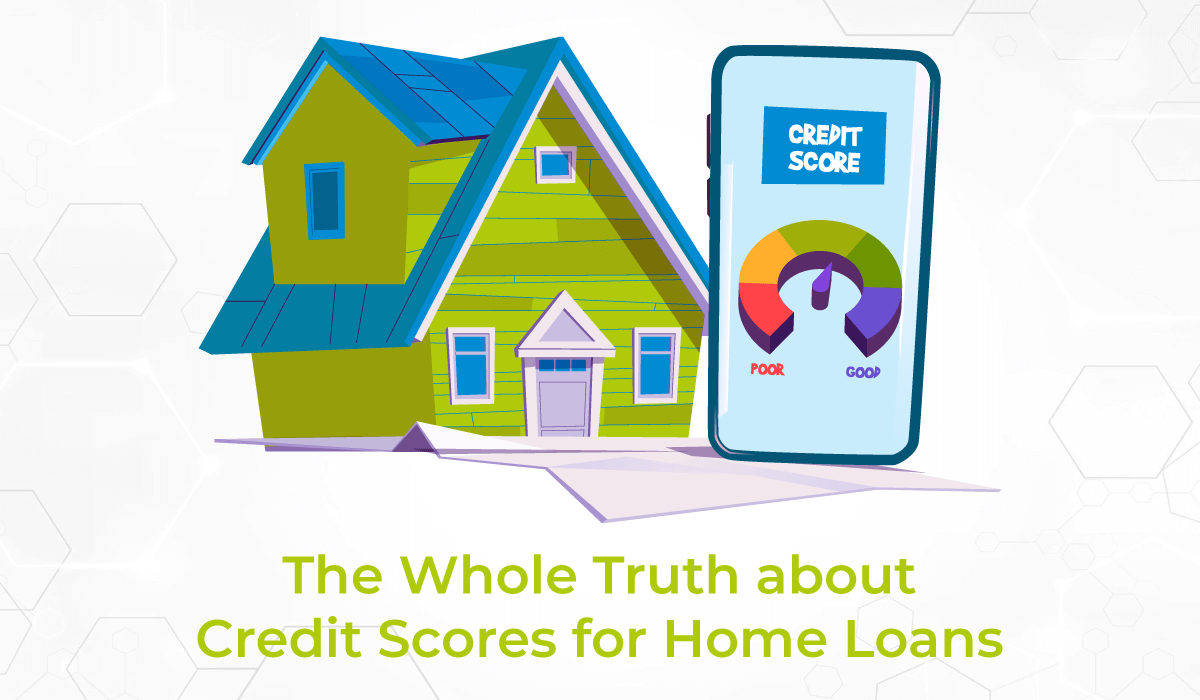
The Whole Truth about Credit Scores for Home loans

It is important to have a good credit score to buy a home because it shows how you handle debt. Credit scores can help you qualify for lower mortgage interest rates, simplifying and reducing costs.

The terms credit reports, credit bureaus, etc., are fundamental to maintaining good credit scores for home loans. In addition, you will better understand your credit score, what it is, and how you can increase it to qualify for a home loan quickly. This post covers all of them.

Your credit score is a critical factor in securing a Home Loan.
Our team of experts can help you understand your credit score.

A] How does your credit score affect your chances of getting a home loan?

Getting a home loan is mainly dependent on your credit score. The ability to repay the loan is one of the major criteria upon which a bank determines whether or not to approve a home loan application. You must know that the bank will check your credit score and history as soon as you submit your completed home loan application.

Several factors, including the applicant’s credit score, are considered during the approval process.

B] Determining a Good/Qualifying Credit Score

The way lenders determine your credit score might be of interest to you before we discuss the credit score you need to qualify.

Usually, lenders use the middle or median credit score you receive from major credit bureaus when you apply for a loan on your own.

Generally, the lowest median score among all mortgage clients is considered the qualifying score when there are two or more borrowers. A loan’s median score is computed by averaging the scores of all borrowers on loan.

An average credit score of 650 would be calculated based on an average of 580 and 720 for the co-borrower. It can make a difference in whether you qualify for a conventional loan if your credit score is below 620.

However, if you are interested in finding out how to procure a home loan on low cibil scores, you can refer to our guide: How Do You Get a Home Loan With a Low CIBIL Score?

It is important to remember that to calculate your rate and mortgage insurance. Low median scores are used so that you may have a slightly higher rate.

C] Factors Considered while Calculating a Credit Score

The following factors can affect your credit score:

1. Repayment History

It is primarily determined by how promptly you have repaid your debts in the past, which determines your credit score. Any default on credit cards or loans will negatively impact your credit score. Unpaid bills negatively affect your credit score the longer they remain unpaid and the more frequently they occur.

Your repayment history largely determines your credit score.

2. Number of Credit Inquiries

If you apply for a new credit line, the lender will check your credit report. This is known as a hard inquiry. It determines whether your loan is sanctioned by assessing your repayment capacity.

When you apply for credit with multiple institutions, it suggests that you are credit hungry. As every lender is concerned with obtaining funds returned on time, aggressively applying for credit from too many lenders gives the impression that you might have difficulty paying back your loan.

3. Length of Credit History

Banks keep credit histories in a detailed format. Potential lenders can obtain a detailed report on your credit history the first time you are approved for credit. It is possible to get a credit history more easily if it is long and positive.

D] Required Credit Score for a Home Loan

To qualify for a home loan, no universal minimum cibil score for home loan is required. Each bank has a cut-off point for whether an application is accepted or rejected. Generally, when applying for a home loan in Mumbai, it is advisable to have a credit score of 750 or higher, also known as a CIBIL score, which indicates good credit.

E] What is the impact of your credit score on your home loan?

A borrower’s credit score impacts their application for a home loan in several ways. A credit score identifies a person’s creditworthiness, determining their eligibility for an offering. As a result, your credit score is heavily dependent on the history of your loan repayments, credit card claims, and other forms of credit.

The credit score is also a critical component of the eligibility criteria, and most lenders require an average credit score of at least 750 before considering you for a loan.

Additionally, maintaining a good cibil score for home loan when applying for a home loan helps you to get approval more quickly. To qualify for a mortgage loan, you need to meet certain criteria, and using a calculator does not guarantee approval.

Applicants who cannot meet the minimum credit score for home loan applications may have their applications rejected or have to pay a higher interest rate for their loans. CIBIL scores are one of the most important factors determining the approval or denial of an application for a loan.

Finally, you can get a better loan deal by having a high CIBIL score. A good credit score of at least 750 entitles you to special loan offers. When you have a CIBIL score to complement your home loan, you can use them to your advantage.

F] Tips to Improve Your Credit Score for Home Loan

To get pre-approval for your home loan application, you can do a few things to improve your credit score.

1. Consolidate your Debts

If you have multiple bills to pay monthly, consider consolidating them. Most banks offer credit cards with balance transfer features. This feature allows you to pay off all your other credit cards on time by transferring the outstanding balances onto this card. Find out if your credit card has this feature by contacting your bank.

2. Monitor your Credit Report

Check your credit report regularly. The National Credit Bureau offers an online portal to view your credit report. Keeping an eye on your credit report frequently can help you improve it without delay if you know what’s hurting it.

3. Lower Credit Usage

Credit utilisation is a portion of your total credit limit to meet your financial obligations. After keeping track of your credit report and paying your bills on time, this is the next step you should take. With your outstanding monthly debt, don’t exceed 30 percent of your credit limit. As a result, you can improve your credit score effectively.

4. Credit Enquiries

It is commonly known that the number of credit inquiries you make also affects your credit score. Instead of calling your preferred bank, you can ask credit-related questions via its online portals. The result is that your credit score is elevated while your credit inquiries are minimised.

G] FAQs

1. Is there a way to improve my credit score for home loans?

While applying for a home loan, lenders usually check one’s credit score and use the information and policies to determine loan eligibility.

The following are some tips for improving your credit score:

  • Build a strong credit file.
  • Pay your bills on time.
  • Don’t let your accounts fall behind.

2. What credit score should I have to get a home loan?

A score between 650 and 749 is considered good, and lenders may offer you a home loan after inquiring about your other financial details. However, lenders usually consider 650 as the minimum CIBIL score for home loan.

3. Does a home loan require a minimum credit score?

The lenders usually consider 650 as the minimum credit score required for a home loan.

4. How can I check my credit score?

Each nationwide credit bureau offers free copies of your credit reports every 12 months through www.annualcreditreport.com. Additionally, Equifax offers six free credit reports yearly to myEquifax account holders.

Our FAQs should help you resolve your queries about credit scores with respect to home loans. However, if you have any additional questions, you can get in touch with our  loan agents in Mumbai, we’ll get you sorted.

Your credit score is a critical factor in securing a Home Loan.
Our team of experts can help you understand your credit score.

Car Loan

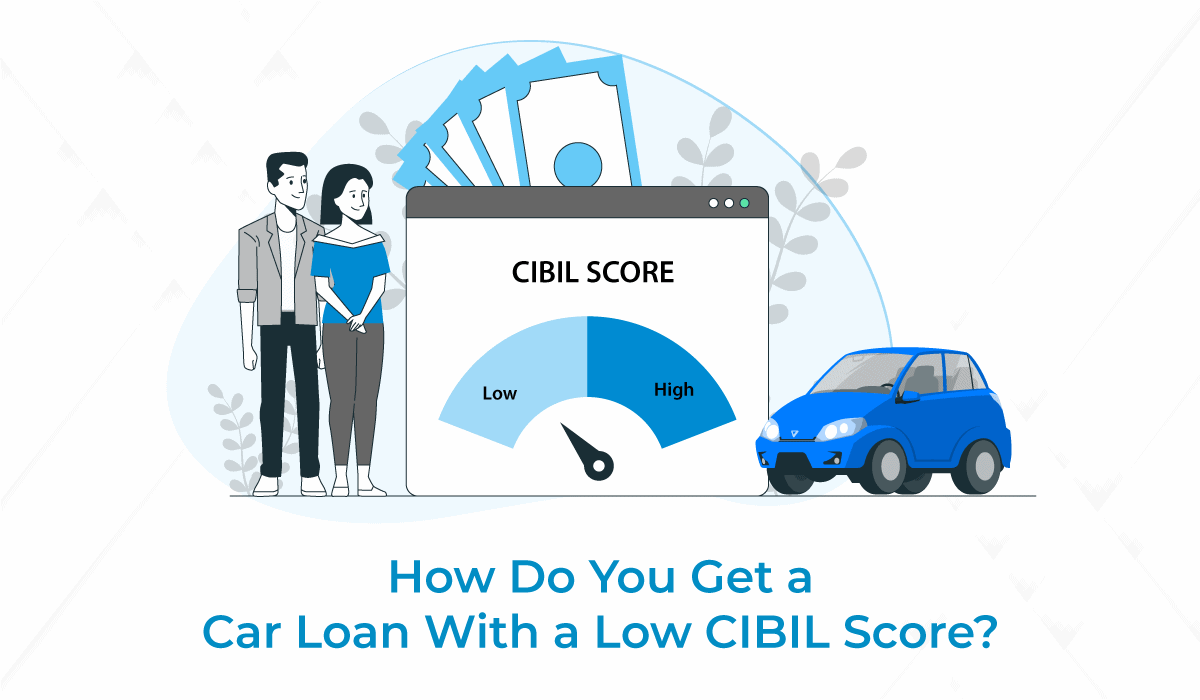
How Do You Get a Car Loan with a Low CIBIL Score?

Are poor credit scores holding you from buying your dream car? Check out expert tips on how you can get an approved car loan with a low CIBIL score.

Getting a car loan for a low CIBIL score can be a tough task. Even when you receive approval for it, lenders might charge you higher rates of interest- eventually leading to significant EMIs and the overall increased loan burden.

With help from leading loan service providers or consultants like Real Money Solutions, you can get expert assistance on getting a car loan with a low CIBIL score. Repaying the car loan with timely payments serves to be a great way to improve your CIBIL score.

Don’t let the low CIBIL score hold you back from getting your dream car.

What is a CIBIL Score?

CIBIL is Credit Information Bureau (India) Limited. CIBIL is a popular credit information company with its license by the RBI or Reserve Bank of India. Other credit information companies licensed by the RBI are Highmark, Equifax, and Experian.

CIBIL India is an integral part of TransUnion – a multinational group in America. Therefore, credit scores in India are referred to as CIBIL TransUnion Scores. CIBIL Score is available as a numeric summary of 3 digits signifying your credit history, report, and rating. A typical CIBIL score ranges from 300 to 900. If your score is closer to the mark of 900, it is regarded as a better credit score or rating.

Importance of CIBIL Score for a Car Loan

Some of the main reasons why car loan lenders might want to check your CIBIL score are:

  • Representation of Credit Health: The 3-digit dynamic numeric representation is the measurement of your overall creditworthiness -your overall eligibility for a loan. Just like other types of loans, car loans also follow the same procedure for the loan approval process as executed by financial institutions and banks.

The CIBIL score as specified in the CIBIL report, ensures that lenders are aware of your overall credit history, existing loans, timeliness regarding loan repayments, frequency of loan applications, loan rejections, and so more. The CIBIL score helps offer them insight into the potential of obtaining debt from you within a predetermined duration. It serves to be a deciding factor in the process of rejecting or accepting auto loan applications.

  • CIBIL Score Based on the Range: Different CIBIL score ranges depict different aspects of your debt repayment pattern and credit history. The minimum CIBIL score for hassle-free and seamless loan approval is 750 -regarded as a decent score. The lower will be your CIBIL score, the lesser will be your opportunity to get a car loan approval.
  • Determination of the Rate of Interest: With a CIBIL score below 600, you have a reduced chance of obtaining a car loan. The higher your CIBIL score, the higher will be your scope of obtaining the car loan approval. Therefore, a higher CIBIL score will not only make you eligible for a competitive rate of interest but will also help you to be in a position to ensure negotiation on the interest rate.
  • Determination of the Amount for Car Loan: Just like eligibility for an car loan, a higher CIBIL score will deliver you the freedom to negotiate the loan amount while getting a better deal. Lenders of car loans mostly agree to offer a higher loan amount to end consumers with a decent credit history.  Through the right understanding of the requirements, you can get the best car loan in Mumbai.

Tips to Get a Car Loan Even with Poor CIBIL Score

#Work Towards Improving the Credit Score Before Purchasing a Car

The credit score is utilized by lenders to gauge your creditworthiness. The higher the score, the better your chances of securing an auto loan at your desired terms & conditions. The CIBIL score is calculated based on your credit history, including repayment of credit card bills, previous loans, EMIs, and others.

It is recommended to go through your credit score before applying for a car loan. Make sure that your credit report is error-free. If you have time, you can work on improving your credit score before buying your dream car.

#Pay a Larger Down Payment

One of the best ways to make sure that your car loan gets approval with a poor CIBIL score is by paying a larger down payment. Usually, auto loan lenders do not approve loans for 100 percent of the vehicle’s on-road price. The loan amount is responsible for covering only 80 percent of the price of the car. The borrower is expected to pay the remaining amount. This can be covered with a personal loan, which is completely different from a car loan.

When you have a poor credit score, making a larger down payment can improve the overall eligibility for securing an auto loan. As you opt for a lower down payment, it minimizes the LTV or Loan to Value ratio -minimizing the risks of the lenders.

#Bring Along a Co-signer

Usually, borrowers do not require a co-signer or guarantor while applying for a car loan. However, when you have a poor credit score, you can think of bringing along a co-signer for the process of the loan application. A co-signer is a person who takes on the responsibility of paying back the loan, and is in fact obligated to pay any payments missed by the primary borrower of the funds. Ideally, it is expected for the co-signer to possess a good credit score.

When you have a cosigner, it helps in improving the chances of car loan approval. It also helps significantly reduce the overall costs of auto loans by minimizing interest rates.

#Opt for a Budget Car

When you have a poor CIBIL score, it implies that you cannot apply for higher auto loan amounts. Opting for a for budget-friendly cars can help reduce the entire loan amount. When you are applying for a smaller loan amount, the lender might approve the auto loan -even with a poor CIBIL score.

#Consider Dealer Financing

Most auto dealers have links with pioneering lenders -including NBFCs and banks. This makes it easier for customers to ensure car loan approvals. However, one of the major demerits of the process is that loans obtained directly from dealers can be expensive. It is because interest rates tend to be higher. On the positive end, there are no strict eligibility criteria -allowing you to secure auto loans easily.

When you go ahead with the auto loan lender, as suggested by the dealer, it is recommended to conduct proper research by comparing interest rates and negotiating the terms of the loan.

Use the Car Loan as an Opportunity to Build the CIBIL Score

When you go ahead with paying your EMIs on time, you can improve your overall CIBIL score significantly in a span of the next few months. If you wish to avoid missing EMI payments, you can think of setting up the process of automated payments through a reliable software solution. In this manner, EMI gets deducted automatically from the bank account every month. This ensures that you never forget your payments.

Don’t let the low CIBIL score hold you back from getting your dream car.

Conclusion

When you wish to secure an auto loan with a poor CIBIL score, it will require research and planning. Ensure that you execute planning to accommodate the EMIs for your car loan easily within your monthly budget.

Car Loan

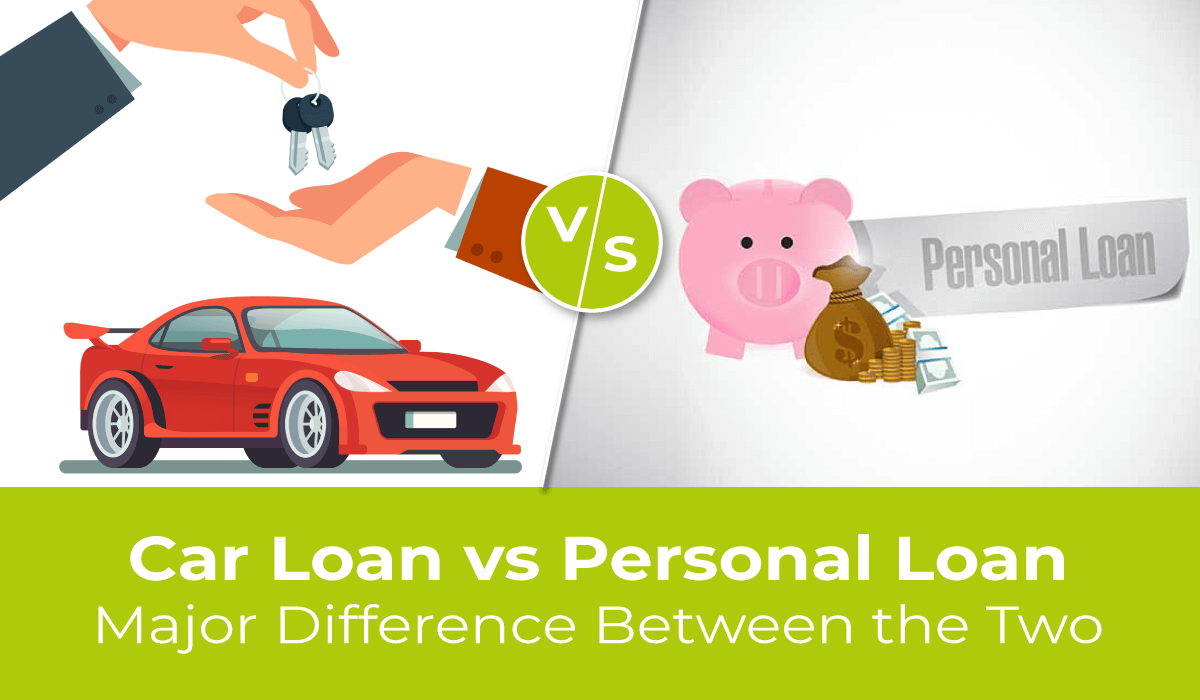
Car Loan vs Personal Loan : Major Difference Between the Two

Are you in the market to purchase a brand-new car? You might as well need a loan to cover the overall costs. Car loans and personal loans are major financing options you can consider. Believing that you meet the existing lending requirements of these loan types, it is relatively easier to obtain them. At the same time, it is equally important to understand the difference between the two to determine the best choice.

There is no denying the fact that new cars do not come at a cheap price. Unless you have ample cash lying around to make the purchase, you need financial aid for the vehicle. With a significant amount in line, you might wonder which loan is the best option for you -a car loan or a personal loan. While you can leverage either of the loan types to finance your car, one could be a better option than the other in your case.

Trying to decide between a Car Loan and a Personal Loan?

Through this blog we will cover the major differences between Car loan Vs Personal Loan.

What is a Personal Loan?

A personal loan is an unsecured loan that comes forth with a wide range of uses. Most people consider taking personal loans towards consolidating debts, paying for house repairs, and covering or upgrading car repairs. You can leverage personal loans for any type of expense -like financing your new car.

Personal loans are usually available with a higher rate of interest than car or auto loans as personal loans tend to be unsecured. Typically, you might not require making a down payment. Still, some lenders might charge an origination fee.

Also Read: How to Get a Personal Loan with a Bad CIBIL Score?

What is a Car Loan?

A car or auto loan is a type of secured loan that makes use of the car as collateral. This implies that if you end up falling behind on the payments, the lender might consider repossessing your car to fulfill its losses.

As the lender is guaranteed to be paid in one way or the other, it becomes less risky for them to loan the desired amount of money. Also, as it is less risky, lenders pass on the relevant savings to you through a reduced rate of interest -saving you significantly throughout the loan’s life.

Also Read: How Do You Get a Car Loan with a Low CIBIL Score?

Understanding the Differences Between a Personal Loan Vs Car Loan

What is the difference between a personal loan and a car loan? A personal loan is used for multiple purposes -even buying a car. On the other hand, a car or auto loan is specifically aimed at purchasing a car. Every loan type comes with its own pros & cons. Therefore, it is important to go through the requirements of both in detail before you sign the document and hire a personal loan agent.

Rate of Interest:

Personal loans tend to be unsecured. Therefore, the rate of interest can be higher in this case as there are higher risks involved in the process of lending. The payable interest rate on a personal loan varies depending on several factors -including your overall income, credit score, and others. The better credit score you have, the better chances you have of availing the loan amount of your choice at competitive interest rates.

With respect to car loans, the car purchased serves as collateral. When borrowers fail to repay the desired loan amount, the car will be then repossessed by the lender or the bank. The minimized risk of lending gets transferred to the borrowers in the form of reduced rates of interest.

Amount of Loan Offered:

It is recommended to select lending institutions that enable you to borrow around 100 percent of the total car’s ex-showroom price as personal loan. It is possible only when you have a decent credit score.
With a car loan, you can borrow up to 80 percent of the ex-showroom price of the vehicle. It is one of the main reasons why most people prefer availing a personal loan to cover the remaining amount that they require.

Loan Tenure:

For both types of loans, the repayment tenure tends to vary. An immediate personal loan offers you a repayment tenure of around 60 months. On the other hand, in case of car loans, most lenders tend to offer a repayment tenure of around 7 years.

When you have access to a longer repayment tenure, it offers the luxury of ensuring smaller investments. However, you will end up paying an increased amount of money as interest rates. A shorter repayment tenure will include larger installments along with a lower amount of interest rate.

It is recommended to select the option allowing you to pay the loan installments without making compromises on other types of financial commitments. You can leverage the functionalities offered by a reliable online EMI calculator -the one offered by Real Money Solutions. It allows you to check the EMI you are expected to pay for the respective loan amount and its subsequent interest rates.

The objective of the Loan:

There are several reasons to avail of a personal loan. There are no specific restrictions on the objective of borrowing the loan amount. The only exception is that the funds obtained from the loan should not be used for any illegitimate purpose.

On the other hand, you can make use of an auto loan solely for funding your car or vehicle. If you wish to combine your purchases with other expenses, it is recommended to turn to personal loans for maximum profits.

Ease of Loan Availability:

When compared, auto loans are comparatively easier to get access to. It is because your car serves as the collateral while reducing the overall risks of borrowing. It is important to pay attention to developing a decent credit score. Moreover, it is equally important to make sure that all your loan documents are in place to get your loan approved without any issues.  If you are interested in securing a personal loan without a pan card, you have to meet a strict eligibility criteria.

Procedures to Avail the Loan:

It is usually harder to ensure approval of a personal loan than a car loan. It is primarily because of the lack of collateral. When you apply for a personal loan with a poor credit score, it will end up attracting higher interest rates. Moreover, it can also result in the rejection of your loan application.

On the other hand, car loans can be easily availed without much heed to the credit score. It is because of the presence of your vehicle as collateral. Recently, the procedures to apply for both personal loans and car loans have become easier. With the constant rise in the number of reliable lenders including both banking and non-banking institutions, it has become a simpler process to avail loans. For personal loan approval, however, you might require access to more documents.

Also Read: Home Loan vs Personal Loan Which One Should You Opt for

Trying to decide between a Car Loan and a Personal Loan?

Conclusion

The ultimate choice of either selecting a personal loan or a car loan for buying your new vehicle should be analyzed by considering several factors -like principal amount, loan tenure, the amount of interest, and the EMI amount. Personal loans are great options if you wish to get off with the total loan tenure soon enough with a minimal amount as the rate of interest. On the other hand, car loans are a great option if you are not able to pay a higher EMI amount every month and want to repay the desired loan amount over a longer span. You can check out the best available options with both banking and non-banking institutions at Real Money Solutions to compare different loan options.

As one of the trusted private money lenders in Mumbai,we offer a wide range of financial services including both personal and car loans in mumbai.

Home

9 Different Types of Home Loans You Should Know About

Purchasing a house is one of the most expensive affairs we will ever undertake in our life. The rising property prices make it nearly impossible for a person to buy a house without a loan. A home loan is a financial tool used to purchase a house at a cheaper interest rate and as a tax deduction for the homeowner, making it an attractive option for prospective home buyers.

Home loans have become increasingly popular in India over the past decade. Several banks provide us with loans to buy the new home we have been dreaming of for a long time.

There are, of course, different housing loan types to help home buyers to get through all hurdles along the way to owning a home, and this article gives you an insight into nine housing loan types that can help home buyers.

Find the right Home Loan for you and your family!
Our expert support team will guide you through the process, from application to closing.

A] 9 Different Types of Home Loans in India

Though there are many home loans in India, here we have covered different types of home loans that you may find helpful.

1. Loan for Land Purchase

Land purchase loans are provided by financial institutions so that borrowers can purchase a plot for a house. When the property construction is completed, the taxpayer may take advantage of tax deductions on home loan providers in Mumbai.

As a general rule, most loan providers offer you 80-85% of the market value of the land as a loan subsidy, meaning that you have to pay the remaining 15-20% as a down payment on the loan.

Keep in mind, there’s a difference between Loan for Land Purchase and loan against property.  Loan against property is taken for an already existing property.

Read more about Loan against property with our informative guide: Key Difference Between Home Loan and Loan Against Property

2. Home Purchase Loan

A new home can be financed with a home purchase loan. This is another type of home loan in India the process of which can start once you have determined your eligibility and ability to repay the loan.

To determine your repayment capacity, you will need to look at factors such as your overall monthly income and expenses and other factors such as your spouse’s income, assets and liabilities, stability of employment, and so on. With this type of financing, it is possible to borrow up to 80% of the market value of the residential property.

3. Loan for Home Construction

To obtain a home-construction loan, the individual must own or co-own a piece of land on which they intend to build a residential property. It is essential to understand that a financial institution’s ability to grant a loan, in this case, will depend on the construction cost estimate they can provide.

4. Home Expansion or Extension Loan

A home expansion is another type of home loan that is most useful when you don’t have funds and intend to expand your existing home by adding a new room or constructing a new floor. Home expansion loans, also known as home extension loans, are the kinds of loans required in such situations.

5. Home Improvement / Renovation Loan

Home improvement loans are available to homeowners who own a house but cannot afford to renovate it. During a renovation, the property may be repaired, walls may be painted, light fixtures may be installed, the house may be extended, and many other things.

A loan works like this: A borrower provides the lender with a cost estimate of the work that needs to be done, and then the lender takes a quote from the contractor to verify that the amount presented is accurate.

Immediately after receiving the money, it is released to the contractor, who is due the money at the rate of the construction work. 

6. Home Conversion Loan

Home conversion loans can be used by individuals who already have loans on their homes but want to sell them and buy a new one. Borrowers can get a new home when choosing this housing credit because the existing loan can be transferred to the new property. There is no need to repay it or for another lender to repay it.

This type of loan, however, has a higher rate of interest than the others. 

7. Home Loan for NRIs

This type of mortgage loan specifically targets non-resident Indian if they are looking to buy a residential property in India but are not Indian citizens. There is a difference between the application process and documentation for this type of home loan and the rest available in India. Despite this, this housing loan has a similar structure. 

8. Bridge Loan

Buying new residential property by selling your old one is possible with a bridge loan, a short-term financing option. This loan amount can be utilized to finance the purchase of a new home until the old property can be sold. The duration of bridge loans is usually less than two years, and the interest rates are generally high. 

9. Balance transfer home loan

Buyers can benefit from lower market interest rates by transferring their home loan balance to a balance transfer loan. The Reserve Bank of India insists that customers should be given lower interest rates when they transfer their balance to their new bank. Still, almost none of the Indian banks do so, making balance transfers a viable option for those looking to transfer their debt.

A customer switches his home loan to another bank for a lower rate with this loan. Buyers with existing loans can reduce their burden with a balance transfer.

B] Stamp Duty and Registration charges

To cover most of the home-buying expenses, you should choose a home loan sanction that is large enough. However, your home loan sanction does not include stamp duty or registration costs. As a result, save for these out-of-pocket expenses.

Apart from the purchase price, the process of buying a home involves a variety of costs. To complete your home purchase formalities, you must pay mandatory stamp duty, registration fees, and parking or maintenance fees.

States may charge anywhere from 7-10% of the property value for stamp duty and registration. A few states currently offer stamp duty concessions to women homebuyers, depending on government discretion.

Also Read: Key Differences: Home Loan Top-Up vs Balance Transfer

C] Benefits of Taking a Home Loan

The biggest liability is typically a home loan. Although the home loan is huge and has a long term, there are also some advantages. Take a look at the following to learn about the advantages of home loans.

Low-Interest Rates

House loans have lower interest rates than any other type of loan. For people who are financially burdened, a loan to supplement their current mortgage may be more affordable than a personal loan.

Low monthly Repayments

One of the undeniable benefits of taking a home loan is to enjoy the facility of low monthly repayments. A borrower can pay off monthly installments.

Due to the lower amount of cash one has to pay every month, it is easier to make monthly payments.

The period for the loan repayment is chosen, depending on a person’s age and how many years they have left before they are expected to retire.

Reclaiming Tax Deductions

Another major benefit of home loans is the ability to reclaim tax deductions. A mortgaged property repaid with interest and principal could qualify for a tax deduction. The maximum deduction for the principal repayment of home loans can be claimed under Section 80C. There is a limit of Rs. 1.5 lakh for such deductions.

The interest component of the repayment can be deducted under Section 24B.

Also Read: Understanding Tax Benefits on Home Loans & How to Claim Them

Find the right Home Loan for you and your family!
Our expert support team will guide you through the process, from application to closing.

Conclusion

There are various purposes for which banks provide home loans, in addition to purchasing houses. Hence, you must thoroughly understand the different types of home loans available in the Indian marketplace before applying for a mortgage.

If you are looking into loan advisors in Mumbai especially if you are considering applying for a home loan, we can help you through the process.

Home Personal

Home Loan vs Personal Loan: Which One Should You Opt for

Loans are often viewed as an option that helps a consumer in making a purchase by covering short-term cash or assisting in building/purchasing a long-term asset such as a home. Many financial institutions such as banks, non-banking finance companies referred to as NBFCs, along with Housing Finance Companies offer a range of loans to meet the various requirements of the consumer.

Today, soliciting loans from banks, online loan agents, or any other financial service provider is becoming an increasingly attractive method of financing personal as well as professional ventures along with making purchases among the growing working population. Loans serve as an effective means to fund ventures that cannot be built on an individual income alone.

Choosing between a Home Loan and a Personal Loan can be difficult.
Make the right choice for you and your financial needs.

In this home loan vs personal loan article, we will be primarily focusing on what differentiates the two.

A] What is a Home Loan?

Home loans are usually solicited when an individual is planning on making a new purchase or wants to renovate his/her home or wants to construct a new house on their property. A home loan is offered when the cost is more than what the individual can arrange.

By opting for a home loan for a certain percentage of the property cost, the individual can pay their creditors back in installments over a fixed duration of time while still living within their means.

With a home loan, the individual can borrow the money required to make a down payment and go ahead with the purchase without having to spend all their funds. Today, banks and other financial institutions offer a variety of home loans.

Also Read: The Whole Truth about Credit Scores for Home Loans

B] What is a Personal Loan?

Personal loans can be solicited for purposes including travel, higher education, purchase, and home renovation. They often act as an added cash reserve in case of emergencies. The main factor that differentiates a home loan from a personal loan is that – personal loans are usually unsecured whereas home loans take into consideration the property that will be purchased as collateral.

In a personal loan, the bank lends money to the individual based on their creditworthiness. A personal loan does not require any kind of collateral in exchange for the required loan amount.

Also Read: How Do You Get a Personal Loan Without Security?

C] Difference between a home loan and a personal loan: Things to know

Home loans and personal loans are both available to the consumer based on their specific needs. Many a time, borrowers seek out home loan services when they are ready to make a big purchase on their own. While on the other hand if they require a little amount of money for a down payment, a personal loan can be considered a perfect solution.

But what exactly is the difference between a home loan and a personal loan?

Both differ in terms of multiple collateral requirements, interest rate, amount, purpose, EMI, and processing time. There are also many other aspects based on which a comparison between personal loans and home loans can be drawn.

1. Collateral

  • Personal loans are unsecured forms of loans that do not require any collateral in any of the transactions.
  • A home loan is a type of secured loan where the property itself acts as collateral that can be seized for auction by the lender if the borrower defaults on the payment. This is the most critical difference that sets a home loan apart from a personal loan.

2. Sum involved

  • Personal loans have smaller sums that range from ₹50,000 to ₹25-40 lakhs. Personal loans are generally solicited by individuals for a short injection of funds. The loan amount that an individual can be eligible for is often determined based on their existing prospective source of income along with the prior borrowing history of their credit scores. There are a few service providers who may offer the upper limit of ₹40 lakhs. However, this amount is likely to be lent to individuals with high incomes and exceptional repayment history.
  • Home loans generally offer the largest sum ranging between ₹5 lakhs to ₹10 Crs. Some lenders often offer sums in the range of  ₹1-2 lakh. The loan amount is influenced based on the borrower’s repayment history as well as income. However, it depends more on the cost of the property that is being purchased.

3. Tenure

  • Personal loans have a fixed term tenure that ranges from 12-60 months, i.e 1-5 years. Some financial institutes also offer a shorter term of up to 6 months. However, terms longer than this range are very rare. In personal loans, the lender expects the customers to repay them in a shorter duration due to their higher risk.
  • Home loans can range from 1-30 years. The lower limit on the tenure of a home loan may not be ideal for most borrowers as these types of loans come with larger sums that may take more time to repay. Loan tenure is a major factor when weighing in between a home loan and a personal loan.

4. EMI payment

  • Personal loans often have a higher EMI for a similar principal amount and the tenure for a personal loan does not often exceed five years. A personal loan requires the borrower to make more substantial payments over a short duration of time to repay the loan.
  • In comparison, home loans have relatively lower EMIs. The payments are often spanned over a long time period, especially in case of a high principal amount. This is often considered a vital point to differentiate a home loan from a personal loan when purchasing a property.

5. Interest rates

  • A personal loan usually has a higher interest rate that falls in the bracket of 11%-25% per annum. This is primarily a consequence that arises due to a lack of collateral involved, which makes a personal loan a higher-risk investment on the part of the lender.
  • Home loans come with an interest rate that falls in the bracket of 8%-12% per annum due to their long tenure. The comparison between a home loan and a personal loan based on their interest rate often gives home loans a higher edge over the other.

Choosing between a Home Loan and a Personal Loan can be difficult.
Make the right choice for you and your financial needs.

Also Read: Key Difference Between Home Loan and Loan Against Property

Conclusion

We have seen that home loans and personal loans are taken for different purposes. However, before opting for any loan, it is vital to closely study and understand once finances and repayment capacity before deciding on the tenure as well as the loan amount. It is equally important to understand the benefits as well as the drawbacks both the loan types provide.

Before choosing one, a comparison of home loans vs personal loans can help in gaining clarity on the wide range of options available. It is equally important to understand the online application processes offered by different providers along with the rapid dispersal of funds and flexible repayment options offered for the loan.

Home

Key Difference Between Home Loan and Loan Against Property

Many people get confused between a home loan and a property loan. So, let us clear the doubt for you today. A home loan is usually taken to buy a new property, whereas a loan against property is taken against the property that you already own. A home loan and a loan against property are two different types of loans. Thus, it is important to understand and know the difference between the two before applying for a loan.

Still Confused Between A Home Loan And A Loan Against Property?

1] What is a Home Loan?

A home loan or a housing loan is a resource that helps you to get the funds required to buy a new house. You can avail home loan by paying a small down payment. The rest can be repaid in EMIs based on the selected tenure. The loan is provided based on different aspects like:

  • The current value of the property
  • The location of the property
  • The age and income of the applicant
  • Credit historyand CIBIL score
  • Stability – when it comes to the profession and employer category.

1.1] Home Loan Types

You can avail a housing loan from the lender for the following purposes:

  • New house purchase
  • Land purchase
  • Plot purchase
  • Home Construction
  • Home Improvement
  • Home Renovation
  • Home Extension

Also Read: 9 Different Types of Home Loans You Should Know About

2] What is a Loan Against Property?

As the name suggests, this loan can be availed against property like your land, office, or even your home. The main difference between a home loan and a loan against property is basically that a home loan is mainly taken to buy a property or home, and a loan against property is taken against an already existing property.

The loan is given on the current value of the property as per the market rates. You can use the loan amount for any legal purposes; be it a personal emergency or a planned expenditure such as expanding your business, marriage of your children, holidays or travelling, or medical purposes.

Also Read: Home Loan vs Plot Loan: What Is the Difference?

3] Difference between a home loan and a loan against property: Things to know

Interest rate:

The rate of interest on a home loan in Mumbai is generally decided by the market value of the property as well as the income of the loanee. If you have a higher income, a good CIBIL score, and work in a reputed organisation, you have a higher chance of getting a lower interest home loan compared to other applicants.

Interest rates are available in two forms; floating and fixed. Fixed interest rates are popular among people wherein a fixed rate is set for a particular period. Simply put, the interest and principles remain constant for the entire tenure. However, this is not the case with floating rates and it varies for home loans. In floating rates, the principal plus interest portion applicable on the home loan varies depending on the loan structure.

The rate of interest applicable on loans against property in Mumbai are high compared to interest rates for home loans. You can choose from fixed and floating rates and just like a housing loan, the borrower can choose whichever interest rate system is more convenient.

Loan to value:

An important distinction between home loans and loans against propertyis that a loan against property grants you around 60% of the property value. As per RBI-issued guidelines, a person can get the maximum loan amount ranging from 75%-90% depending on the loan-to-value ratio. Also, the processing fees for home loans are typically between 0.8% to 1.2% of the total loan amount. Whereas, the processing fees for availing a loan against property are generally fixed at 1.5%.

Usage:

Home loans have limited use i.e., they can only be limited to purchasing a home, plot, property under construction, and the like. The money borrowed as the loan should be used on expenses related to your home.

Whereas, a loan against property is a multi-purpose loan that is obtained by leveraging land to obtain funds for anything ranging from funding your child’s education to expanding your business. A loan against property is secured by using one’s land asset as collateral.

Tenure:

When it comes to tenure, the maximum repayment tenure allowed for a housing loan is 30 years and borrowers can choose the tenure depending on their repayment capacity. Whereas, the maximum repayment tenure available for a loan against the property is roughly around 15 years. You can choose a tenure for the loan between 1 year to 15 years or less, depending upon your repayment capability.

Process of documentation:

Generally, home loans require about 15 days to be approved and sanctioned and additionally, have a simple documentation process. However, loans against property take longer to be processed given banks and lending institutions need to get the property valued as well as obtain and check upon the personal information of the borrower. Banks also conduct a thorough check-up of your property by cross-checking information regarding the previous owners, government records, etc.

The documents required for loans against property and home loans are quite similar. You can apply for the loan with any of the following documents:

  • Latest salary slips or proof of income
  • Bank account statements for the last 3 to 6 months
  • PAN card
  • Aadhaar card
  • Proof of address (electricity bill, water bill, etc)
  • Documents about the property being mortgaged/ purchased
  • IT returns

In the case of loans against property, you will also need to have complete paperwork of the property that is being pledged as collateral.

Taxation:

The most noteworthy difference between the two types of loans is the tax exemption that can be availed. While loans against a property usually have no tax benefits, home loans do accompany tax benefits under Section 24 for the interest paid on them as well as under Section 80C for the actual principal amount. You can save up to ₹1.5 lakh in tax deduction with a home loan.

Also Read: Understanding Tax Benefits on Home Loans & How to Claim Them

Still Confused Between A Home Loan And A Loan Against Property?

Conclusion

Considering all the information associated with the difference between home loans and loans against property, one can easily differentiate and prioritise their requirements. Thereby, checking and comparing various loan options offered by several banks and NBFCs.

It is important to read all the terms and conditions before accepting any payment terms. Home loans and loans against property are two similar, yet confusing loans. Thus, it is beneficial to conduct thorough research before applying for either of the two loans.

Real Money Solutions provides you with the optimum interest rate on home loans and loans against property, so that you do not have to worry about paying exorbitant amounts every month for your EMIs.

Get in touch with us for more information.

Home

How Do You Get a Home Loan With a Low CIBIL Score?

A credit score is a single figure that holds the potential to cost or save the borrower or applicant a lot of money while applying for a loan. They can also gain lower interest rates if their profile has a good credit score. A low CIBIL score is often a deterrent for many lenders to provide a home loan. But, there are many ways to avail of a home loan with a lower CIBIL score. Besides the CIBIL score, other parameters, especially that of the property to be purchased, are also considered by the lenders while granting a loan.

Our Home Loan services are designed for people
with various credit histories. Don’t let your CIBIL score hold you back.

A] What is a CIBIL score?

A CIBIL score is a widely accepted credit score in India granted to individuals and businesses, as it represents the creditworthiness of the loan applicant. While granting a home loan, the lenders often consider the credit score to be the most important factor for accessing the eligibility of the applicant. It provides an assurance to the lenders that the applicant is capable of repaying the home loan.

This score is a number that ranges between 300 and 900, calculated based on the history of loans availed and repaid by the applicant. A minimum CIBIL score of 700-750 is needed for a bank to sanction a loan. Many banks also have their own requirement of minimum CIBIL score for home loans. However, at least 700 is required by the majority of the banks in India.

An applicant with a CIBIL score in the range of 700-750 and above is considered the least risky. Simply put, the higher the CIBIL score, the higher the chances of the applicant getting a home loan.

Also Read: The Whole Truth about Credit Scores for Home loans

B] Can you get a home loan with a low CIBIL score?

The credit score is expected to have a huge impact on the eligibility of an applicant. Housing finance companies offer credit to borrowers with lower credit scores as they have better research and credit assessment capabilities for the same. However, these lending institutions usually charge higher interest rates on loans to applicants with a lower score to compensate for the higher risk element.

An applicant with a poor credit score can also opt for a reduced repayment period or a co-applicant. When the applicant’s total income along with the credit score is good, it assures the financial institution about the ability of the applicant to repay the principal loan amount as well as the interest.

C] How do you get a home loan with a low CIBIL score?

Improving the CIBIL score to an acceptable level is considered one of the best ways of getting a home loan application reviewed. To improve your CIBIL score, you can:

1.Raising a credit repair request:

An applicant can create an account on the CIBIL website and submit a request to review past repayment records in case of incorrect information being displayed. Requests can also be submitted in case the applicant has some sort of dispute with the lender concerning annual fees and other charges.

2. Clearing the outstanding debt:

This requires the applicant to make the payment of all their debt accounts in full and not through a settlement amount. Debt settlement happens only when the borrower is unable to repay the credit availed. Such accounts appear as ‘settled’ in credit reports, thus lowering the score considerably.

3.Regularising the repayment record:

This requires the applicant to pay their EMIs and credit card dues before the due date so that the past-payment repayment record does not show any irregularities. Practising this method of repayment for a duration of 12 months will help in reflecting a positive record in the credit report and score.

4.Not applying for too many loans:

When one bank rejects a credit card or personal loan, the applicants often apply to other banks for the same. Repeatedly applying for a loan with different banks within a short time period is a bad practice. For applicants with low CIBIL scores, it is always advised to wait for a duration of 12 months before applying for a loan or credit card. While waiting for a year, they can regularly repay their existing loans (if any), thereby increasing their CIBIL score to a great extent.

Also Read: 9 Different Types of Home Loans You Should Know About

D] Tips to Improve your CIBIL Score

Buying a house is always a strategic, financial, as well as emotional decision for any individual. However, getting funding for such a colossal investment through  savings and investments is a challenging task.  Availing of a  home loan in Mumbai can become a critical task for people looking to make a purchase. Whether a bank or financial institution approves the housing loan particularly depends on the creditworthiness of the applicant or the borrower which is reflected by the CIBIL score.

If the applicant has an average CIBIL score, here are top tips that will assist them in getting a home loan sanctioned:

  • It is important to understand the process. The credit score is always based on factors that assist in determining the ability of the applicant to repay the loan.
  • If the credit score and income records are not ideal, the applicant can apply for the loan with someone, i.e. they can add a co-applicant to the loan application.
  • A secured personal loan is considered an excellent option if the applicant wants to improve their credit score to qualify for a mortgage.
  • The applicant can improve their credit score by paying at least the minimum payment on their credit cards before the due date.
  • It is advisable to apply for a loan with an existing lender. This helps in reducing the total turnaround time for the assessment of documents. It also provides borrowers with the chance to benefit from a long-term relationship with the institution.
  • Opt for a higher down payment.
  • Review the credit scores. One of the significant ways to increase the chances of getting a loan application reviewed is to inspect the credit score and understand the reasons for the lower score.

The critical aspect here is that the applicant needs to keep exploring alternatives from different financial institutions that offer home loans at different rates of interest to borrowers who have a low credit score.

Our Home Loan services are designed for people
with various credit histories. Don’t let your CIBIL score hold you back.

Conclusion

It is important to understand that a financial institution assumes a significant amount of risk when offering a home loan as there are chances of default. However, to assess the repayment capabilities and creditworthiness of the borrower, the computation of the CIBIL score is a popular credit assessment tool.

However, a low CIBIL score cannot be considered the end of the world. The applicant can get their dream home even with a low CIBIL score if they follow the right approach. Hence it is always advisable to keep working towards improving the CIBIL score and opt for the loan later when the credit report starts looking better.

Need help securing a home loan? As loan agents in Mumbai, we can help you!

Posts pagination